Press kit

Porsche

AutomobileLA, LA, California, US

www.porsche.com

Porsche H1 2026: 911 Deliveries Up 19%; EU Policy Shift Validates 'Double-E Path'

Porsche's H1 2026 results, released July 8, reveal a critical shift: while overall deliveries fell 16%, its 63-year-old, petrol-burning 911 model saw a 19% increase. This unexpected growth for Porsche's heritage product, amidst an industry-wide EV slowdown and expiring incentives, directly validates the company's 'double-e path' strategy, especially following the European Commission's December 2025 decision to allow climate-neutral fuels beyond 2035.

On July 8, Porsche reported 122,306 deliveries for the first half of 2026, down 16 per cent on last year. Buried in the same release: the 911 was up 19 per cent, while the electric Macan fell and the combustion 718 reached the end of production. Matthias Becker, Executive Board Member for Sales and Marketing, noted, "While our overall deliveries were below the same period last year, these results are in line with our expectations given the challenging market conditions. The sustained demand for the 911 underscores the resilience of our core product and brand appeal." The inversion is total. Porsche spent the decade restructuring itself around an electric future — then the future arrived late, the US pulled its EV tax incentives, China evaporated, and the one product left carrying the company was the silhouette Ferry Porsche drew in 1963. The company has paid for the misread in full public view: a demotion from Germany's DAX index, repeated profit warnings, shredded EV targets, and a new CEO — Michael Leiters, ex-McLaren — installed in January to run the recovery. But Porsche also hedged in a way no rival did. In 2022 it opened Haru Oni, the world's first industrial eFuel plant, in the wind-blasted far south of Chile — actual Patagonia — betting that petrol engines could be made nearly carbon-neutral rather than extinct. In December, Brussels blinked. The European Commission revoked the 2035 combustion ban, cutting the target to a 90 per cent emissions reduction with the gap covered by green steel and climate-neutral fuels — the exact mechanism Porsche built a factory for, three years before it became law. Michael Steiner, Executive Board Member for Research and Development, who championed the eFuels strategy, commented, "Our 'double-e path' was always about offering customers choice and ensuring the long-term viability of the driving experience. The European Commission's decision to include climate-neutral fuels in its 2035 framework is a significant validation of that vision, proving that decarbonisation doesn't have to mean electrification alone."

Trend context

The fight over Europe's engine ban is live this week: the Commission's December proposal to replace the 100 per cent target with 90-per-cent-plus-offsets is now in negotiations between Parliament and member states, which began in January under the Cypriot presidency. Every carmaker is lobbying the text; only one physically built the offset — an eFuel plant already fuelling race series from Chilean Patagonia. Meanwhile the EV slowdown has stopped being a forecast and become a delivery report: US purchase incentives have expired, and Porsche's own electric Macan fell 22 per cent in the half. The question of whether the combustion engine dies or decarbonises is being answered right now — and the 911's growth curve is Exhibit A.

About Porsche

Why we exist

Ferry Porsche couldn't find the sports car of his dreams, so in 1948 he built it himself. Every decision since has served that single obsession: a car you drive for the sake of driving. The company exists to prove the emotional machine can survive anything — war, near-bankruptcy, the SUV age, and now the electric transition — without losing the thing that makes a nine-year-old turn their head.

How we do it

Porsche runs motorsport as its R&D department — a record 19 outright Le Mans wins have field-tested everything from aerodynamics to hybrid systems before customers touch them. It refuses single bets: the "double-e path" develops electric drivetrains and nearly carbon-neutral eFuels in parallel, including the world's first industrial synthetic fuel plant in Chile. And it protects scarcity — demand is never chased with discounts, which is why a 63-year-old design still commands a waiting list.

What we do

Porsche AG is a Stuttgart-headquartered manufacturer of sports cars and performance SUVs: the 911, Taycan, Panamera, Macan and Cayenne lines, plus motorsport programmes and a synthetic fuels venture. It delivered 122,306 vehicles in the first half of 2026, with North America its largest market. Listed on the Frankfurt exchange since September 2022 in one of Europe's biggest-ever IPOs; majority control sits with the Volkswagen Group and the Porsche-Piëch family holding.

Why it matters

Porsche is the canary in industrial Europe's coal mine. If the most profitable, most desired brand in the car business cannot make the mandated electric timeline work, no legacy carmaker can — and the jobs, pensions and export economies built on that industry inherit the miss. The half-year numbers turn an abstract Brussels negotiation into a concrete question: was the plan to ban the engine, or to decarbonise it?

Who it's for

The driver who was told her kind of car had a decade left to live. The engineer who spent thirty years mastering combustion and was reclassified as legacy headcount. The auto executive staring at an EV business case that no longer closes, needing evidence that optionality isn't heresy. Porsche's story is for anyone caught between what regulation demanded and what customers actually bought.

Proof points

911 deliveries up 19 per cent in H1 2026 while total deliveries fell 16 per cent Highest-ranked brand overall, J.D. Power 2026 U.S. Initial Quality Study 19 outright victories at the 24 Hours of Le Mans — the record Porsche Penske won the opening two rounds of the 2026 IMSA season, Daytona and Sebring Haru Oni: the world's first industrial eFuel plant, running since 2022 with 130,000 litres annual pilot capacity 2026 anniversaries: 75 years of Porsche Motorsport, 75 years of Porsche in the UK, 30 years of the Boxster — the car that saved the company

Traction & credibility

The September 2022 flotation was one of the largest in European history. The 2026 Goodwood Festival of Speed staged the brand's 75-years-in-Britain celebration; Newsweek's 2026 Readers' Choice awards named the 911 Best New Car; and a Disney-Pixar collaboration put Porsche inside Toy Story 5. Its owners' community spans the globe, anchored by the Porsche Club of America — among the largest single-marque clubs anywhere. When Brussels rewrote the 2035 rules, the eFuels pathway Porsche pioneered was written into the proposal.

Spokespeople

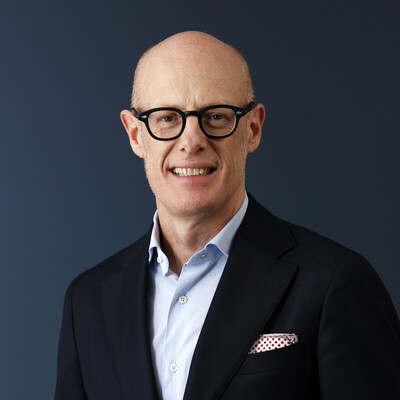
Dr. Michael Leiters

Dr. Michael Leiters

CEO

Leiters is a Porsche returnee with the rarest CV in the business: he began his career in Weissach, helped develop the Cayenne — the SUV purists hated and the company survived on — then left to become Ferrari's chief technology officer and later CEO of McLaren, where he steadied a supercar maker in serious trouble. In January 2026 he walked back into Porsche at its lowest modern moment, trading the safety of a completed turnaround for the biggest one in the industry. He is the operator whose entire career argues that heritage brands are fixed by engineers, not slogans.
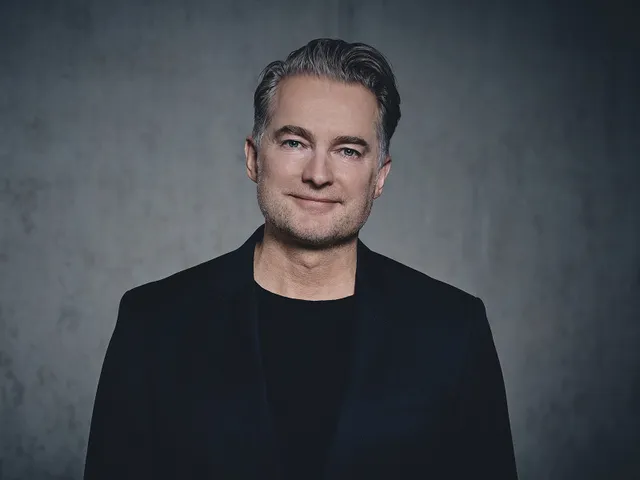
Matthias Becker

Matthias Becker

Executive Board Member, Sales and Marketing

Becker owns the numbers behind this story. A long-serving Porsche commercial executive who built his reputation running the company's overseas and growth markets — the hard territories, not the home ones — he stepped onto the executive board as the sales environment turned hostile: tariffs, expiring EV incentives, a Chinese collapse. His job is selling a shrinking portfolio at full price without touching the discount lever that would destroy the brand, and the 911's 19 per cent growth is his proof it can be done.
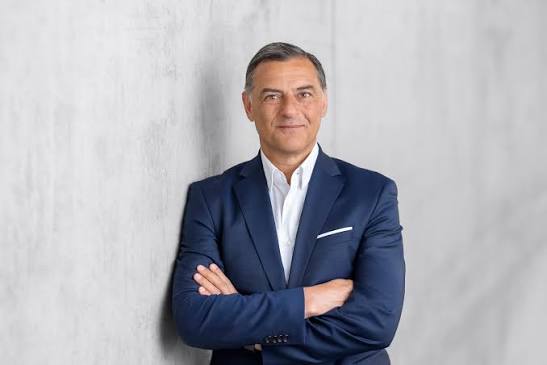
Michael Steiner

Michael Steiner

Executive Board Member, Research and Development

Steiner is the engineer behind the "double-e path" — the refusal to bet Porsche's future on a single technology. While rivals went all-in on batteries, he kept synthetic fuels alive as a parallel programme, and when the Haru Oni plant opened in Chilean Patagonia he personally drove the first 911 filled with fuel made from wind and air. Three years later, the mechanism he championed sits inside the European Commission's rewritten 2035 proposal. He risked being the industry's eccentric; he's now its prophet.

Timo Resch

Timo Resch

President and CEO, Porsche Cars North America

Resch runs Porsche's largest market through its strangest year: incentives expiring, tariffs biting, model lines ending — and customers still queueing for the oldest car in the range. He fronts the US numbers with a salesman's candour, crediting "the resilience of our business and the loyalty of our customers" for a half-year that beat the fear. As the all-electric Cayenne lands in American driveways, he is the voice on whether US buyers will follow Porsche into the plug-in era at all.


Talking points

The insight

Porsche 911 deliveries up 19% in H1 2026 as EU policy shift validates 'double-e path'

newsroom.porsche.com/en/2026/company/porsche-deliveries-first-half-2026-42820.html

The story

Porsche's H1 2026 results show 911 deliveries up 19% while overall sales fell 16%, demonstrating that its heritage model is now a critical growth engine. This market reality, coupled with the EU's December 2025 policy shift allowing climate-neutral fuels beyond 2035, validates Porsche's 'double-e path' strategy of developing both electric drivetrains and eFuels.

Why it matters

The 2035 ban was the single biggest forced bet in industrial history, and Europe's carmakers restructured, borrowed and cut jobs against it. If the best product company in the industry couldn't make the all-electric timeline work, the mandate — not the engineering — was the broken part. The victim is the single-technology consensus; the victor is every company that kept its options open.

Who does it impact

Business and auto desks covering the EV slowdown, policy reporters on the Brussels negotiations, climate desks weighing eFuels against electrification, and the millions of drivers whose next car just got a reprieve.

Proof points

H1 2026: total deliveries 122,306, down 16 per cent — the 911 up 19 per cent, the only growing model line Macan model line down 22 per cent; combustion 718 production concluded; US EV tax incentives expired Sales board member Matthias Becker: "below the same period last year but in line with our expectations" December 2025: European Commission drops the 100 per cent target to 90 per cent, remaining emissions offset by EU-made green steel or climate-neutral fuels; hybrids and combustion permitted past 2035 Haru Oni, Punta Arenas: the world's first industrial eFuel plant, opened 2022, pilot capacity 130,000 litres a year — proof the technology runs, still far from its original 55-million-litre scaling target Porsche ranked highest brand overall in the J.D. Power 2026 U.S. Initial Quality Study — the crisis is financial, not engineering

CTA

Visit Porsche.com to explore the 911 model range and Porsche's eFuels strategy.

Key facts

H1 2026 Total Deliveries
122,306 (down 16%)
H1 2026 911 Deliveries Growth
Up 19%
EU Commission Policy Shift Date
December 2025
Haru Oni eFuel Plant Opening
2022
Haru Oni Pilot Capacity
130,000 litres/year
Spokesperson for Sales Data
Matthias Becker, Executive Board Member, Sales and Marketing
Spokesperson for R&D/eFuels
Michael Steiner, Executive Board Member, Research and Development

Images

2026 Porsche 911 GT3 S/C

2026 Porsche 911 Turbo S First Look: The Most Powerful 911 Ever Is Now a Hybrid

2026 Porsche 911


Get in touch

Timo Resch

Timo Resch

President and CEO, Porsche Cars North America

Drop me a note and I'll reply by email.