Press kit

Born Slippy

Surf: made-to-measure wetsuitsValencia, Spain

bornslippy.co

The future isn't fleece. Meet APTUS 1.0.

Advanced micro-chamber thermal insulation integrated into the torso panels. Japanese Yamamoto neoprene. Twenty-six body measurements. A €1,295 wetsuit built around one person, with production limited to 1,000 worldwide.

A wetsuit has three jobs: keep you warm, let you move and fit your body. Too often, choosing one means compromising on another. Born Slippy's British founder Charles Gadsdon, based in Valencia, Spain, created APTUS 1.0 to bring all three together. It takes a different approach to warmth, with advanced micro-chamber thermal insulation integrated into the torso panels rather than a bulky fleece lining. Japanese Yamamoto limestone neoprene provides flexibility. Individual patterning starts with 26 measurements of the person who will wear it. Developed with feedback from founding athlete and partner Andrew “Cotty” Cotton, with prototype testing first at Croyde Bay, Devon, and then at Nazaré, Portugal. Individually handmade to measure. No standard sizes. Just 1,000 worldwide. FIT: YOUR BODY ISN'T A SIZE CHART A standard size is a compromise between different bodies. Get the chest right and the legs may be too long. Get the shoulders right and the waist may be loose. Excess space can allow water to circulate; a restrictive fit can make movement harder. APTUS 1.0 starts with the person. Twenty-six body measurements inform an individual pattern, designed to reduce unwanted space without restricting movement. Fit is part of how a wetsuit works, not simply how it looks. WARMTH: A DIFFERENT APPROACH TO THE LINING Keeping warm is about slowing the loss of body heat. Adding a thicker lining is one approach. APTUS 1.0 explores another. It uses advanced micro-chamber thermal insulation integrated into the torso panels. The engineered chamber structure is designed to support thermal insulation without relying on conventional bulky fleece linings. Andrew “Cotty” Cotton said the warmth around the chest and back “is incredible. You can really feel the difference compared to traditional fleece.” MATERIALS: WARMTH MEANS LITTLE IF YOU CAN'T MOVE A wetsuit has to move with you through every paddle stroke. Material choice matters as much as thickness. APTUS 1.0 uses Japanese Yamamoto #39 and #40 limestone neoprene, selected for flexibility and thermal insulation. Combined with individual patterning and advanced micro-chamber thermal insulation integrated into the torso panels, the aim is warmth without making freedom of movement an afterthought. The seams are glued, blindstitched and triple-taped. “The custom fit is incredible,” Andrew “Cotty” Cotton said, “and the Yamamoto neoprene feels like cashmere against your skin.” DEVELOPMENT: INFORMED BY EXPERIENCE Andrew “Cotty” Cotton is Born Slippy’s founding athlete and partner. The British big-wave surfer splits his time between Nazaré, Portugal, and the UK. Cotton tested APTUS 1.0 prototypes first at Croyde Bay in North Devon and then at Nazaré. His feedback on fit, warmth, flexibility and construction informs ongoing development. Asked what Nazaré demands of a wetsuit, Cotton said: “Durability, above all, the suits take a real beating out there, and warmth!” His involvement brings first-hand experience of demanding ocean conditions into the development process. ANDREW COTTON ON APTUS 1.0 “I’ve surfed some of the biggest waves on the planet and worn some of the best equipment ever made. Born Slippy is the wetsuit I choose to wear now. The custom fit is incredible,” Cotton said, “and the Yamamoto neoprene feels like cashmere against your skin. It’s performance without compromise.” Andrew “Cotty” Cotton, founding athlete and partner, Born Slippy PRODUCTION: 1,000 MEANS 1,000 APTUS 1.0 is limited to just 1,000 individually numbered wetsuits worldwide. No more will ever be made. Each suit is made to order, with production slots allocated according to capacity. Once the 1,000th suit is delivered, APTUS 1.0 is retired. Permanently. This isn't artificial scarcity or a seasonal marketing exercise. It's a deliberate commitment to quality, craftsmanship and restraint. Fewer. Better. OWNERSHIP: A RECORD OF YOUR SUIT Every APTUS 1.0 carries a serial number and a security code that open its Digital Product Passport via our website. The passport provides access to order progress, the suit’s specification, materials, when it was made and for who, care guidance, warranty information and proof of authenticity. It gives each individually made suit a corresponding digital record as opposed to a piece of paper that gets thrown in the bin. PRICE AND ORDERING APTUS 1.0 costs €1,295 including VAT and is available exclusively through bornslippy.co. Complimentary, duty-paid shipping applies to eligible EU and UK destinations. Malta, Switzerland and Norway are excluded from this arrangement, with shipping and applicable import charges handled separately. PHOTOGRAPHY AND INTERVIEWS Press enquiries, interview requests and requests for approved product or testing imagery: Charles Gadsdon, Founder, Born Slippy, info@bornslippy.co, bornslippy.co. Andrew Cotton interviews are subject to availability. Image selection, publication permissions and photographer credits will be confirmed when assets are supplied.

Trend context

The Nazaré contest window runs from 1 November 2026 to 31 March 2027. The TUDOR Nazaré Big Wave Challenge announced the window on 19 October, with a yellow alert up to 72 hours before a contest day and a green alert confirming it within 24 hours (per nazarewaves.com, 19 Oct 2026). Andrew Cotton, who tested the APTUS 1.0 prototypes, is on the invited list. Product passports are arriving ahead of the law. The European Commission launched its Digital Product Passport Registry on 20 July 2026, and the textile rules are planned for adoption in Q4 2027 (Textilegence, 5 Aug 2026). Born Slippy already gives every APTUS 1.0 its own Digital Product Passport, recording its full specification and materials.

About Born Slippy

Why we exist

The ocean doesn't need another mass-produced wetsuit. It needs a better approach. Born Slippy was founded on a simple belief: technical performance should never come at the expense of quality, fit or craftsmanship. We combine advanced materials, considered design and individual fit to create equipment built for those who demand more from the ocean. We don't believe in producing more for the sake of growth. Our ambition is to redefine what technical ocean equipment can be, building a globally respected brand through innovation, uncompromising quality and deliberately limited production. Fewer. Better.

How we do it

Built around the athlete. Not the production line. We start with the individual, not a standard size chart. 26 body measurements. Precision pattern-making. Advanced Japanese materials. Every detail has a purpose. Developed and refined through real-world testing with some of the world's most demanding ocean athletes, including founding partner Andrew Cotton. Nothing is added for the sake of it. Nothing is beyond improvement.

What we do

APTUS 1.0. Our first statement of intent. A made-to-measure performance wetsuit engineered for warmth, flexibility and freedom of movement. Featuring Japanese Yamamoto neoprene, advanced micro-chamber thermal insulation integrated into the torso panels, and specialist construction. Designed in Spain. Individually manufactured by skilled wetsuit makers. Available exclusively through bornslippy.co. €1,295. Limited to 1,000 numbered suits worldwide.

Why it matters

Fewer. Better. Our commitment is to considered design, quality and responsible production. The industry's answer has too often been to make more. Ours is to make better. Better materials. Better construction. We recognise that making wetsuits has an environmental cost. We won't pretend otherwise. Our responsibility is to challenge every decision and improve wherever possible.

Who it's for

For those who know the difference. Surfers who understand that equipment isn't an accessory. It's what stands between them and the elements. Who value performance over logos. Craftsmanship over convenience. Purpose over excess. For those who expect more from what they wear into the ocean.

Proof points

APTUS 1.0: made-to-measure performance wetsuit, €1,295 including VAT. Individual 26-measurement body profile; no standard sizes. Japanese Yamamoto #39 and #40 limestone neoprene. Advanced micro-chamber thermal insulation integrated into the torso panels. Glued, blindstitched and triple-taped seams. Limited to 1,000 individually numbered suits worldwide; made to order. Every suit carries a serial number and security code that open its Digital Product Passport. Prototype testing at Croyde Bay, Devon, followed by Nazaré, Portugal, with founding athlete and partner Andrew Cotton.

Traction & credibility

Andrew "Cotty" Cotton, British big-wave surfer, is Born Slippy's founding athlete and partner, and is featured in HBO's 100 Foot Wave. APTUS 1.0 prototypes were tested first at Croyde Bay, Devon, and then at Nazaré, Portugal, with Cotton's feedback on fit, warmth, flexibility and construction informing development. Born Slippy launched APTUS 1.0 in October 2026. British founder Charles Gadsdon, based in Valencia, Spain, was formerly Global Director of Growth at MassiveMusic. Born Slippy has published editorial conversations with ocean and conservation figures including Fabien Cousteau, Jo Ruxton MBE and Finisterre founder Tom Kay.

Spokespeople

Andrew “Cotty” Cotton

Andrew “Cotty” Cotton

Founding athlete and partner, Born Slippy

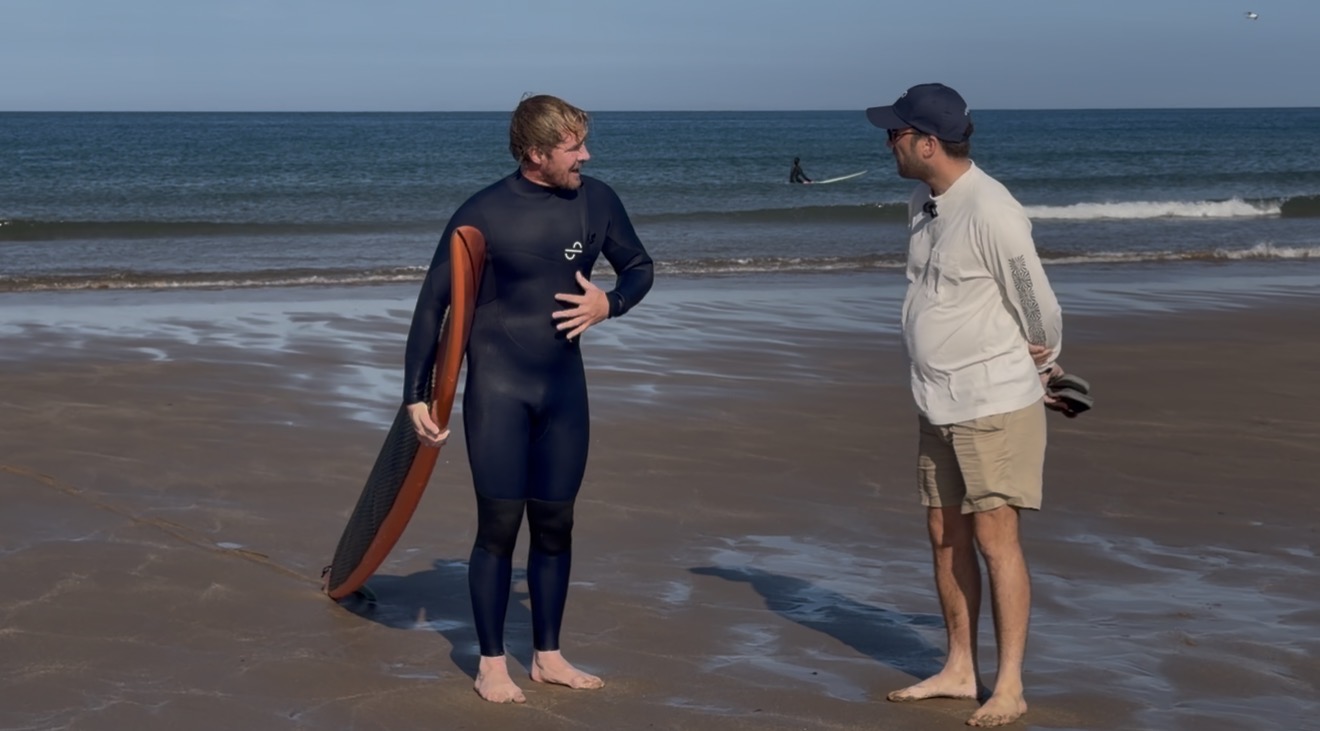
Andrew Cotton is a British big-wave surfer who splits his time between Nazaré, Portugal, and the UK. As Born Slippy's founding athlete and partner, he contributes first-hand feedback on wetsuit fit, warmth, flexibility and construction. His APTUS 1.0 prototype testing took place first at Croyde Bay, Devon, and then at Nazaré.

Expertise

Interview topics: big-wave surfing and preparation for demanding ocean conditions; what surfers need from wetsuit fit, warmth and flexibility; his experience testing APTUS 1.0 prototypes; how athlete feedback informs product development.

Notability

• Red Bull big-wave surfer and internationally recognised Nazaré specialist. • Featured in HBO's acclaimed documentary series 100 Foot Wave. • Rode a wave estimated at 80 feet at Nazaré in 2014. • Recipient of the 2018 WSL Wipeout of the Year award following a serious injury at Nazaré in 2017. • Founding athlete and partner of Born Slippy, contributing to the development and testing of APTUS 1.0. • Extensive experience testing technical surf equipment in demanding ocean conditions.
Charles Gadsdon

Charles Gadsdon

Founder, Born Slippy

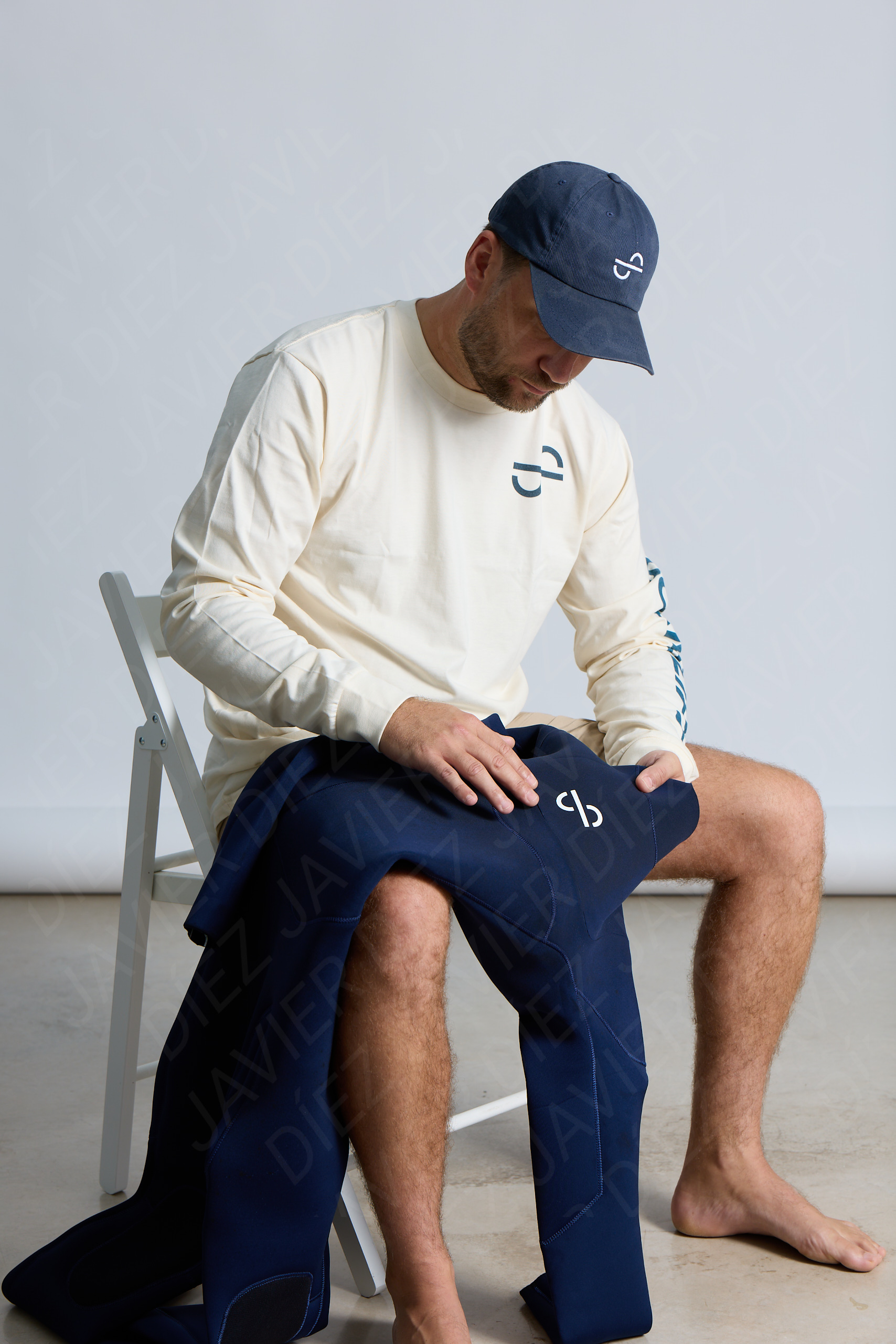
Charles Gadsdon is the British founder of Born Slippy, based in Valencia, Spain. Formerly Global Director of Growth at MassiveMusic, he brings a background in music, culture and international brand partnerships to building a technical ocean brand. A non-surfer himself, Charles worked with founding athlete and partner Andrew Cotton to develop APTUS 1.0 around individual fit, technical design and deliberately limited production. His ambition is to build a small, profitable and globally respected business. The product comes first.

Expertise

Interview topics: why build a made-to-measure wetsuit brand; the APTUS 1.0 product brief, and why it uses advanced micro-chamber thermal insulation integrated into the torso panels; explaining the value of a €1,295 wetsuit; why permanently limit a flagship product to 1,000 units; building an independent brand around product quality and controlled scale; music, culture and design as influences on Born Slippy.

Notability

Former Global Director of Growth at MassiveMusic, an international music agency. Founded Born Slippy and launched APTUS 1.0, a €1,295 made-to-measure wetsuit featuring advanced micro-chamber thermal insulation integrated into the torso panels, with production capped at 1,000 units worldwide. Established a development partnership with British big-wave surfer Andrew “Cotty” Cotton, Born Slippy’s founding athlete and partner. Product testing took place first at Croyde Bay, Devon, England, followed by Nazaré, Portugal.


Talking points

The human

Built for consequence: big-wave surfer Andrew Cotton tested APTUS 1.0 prototypes at Croyde Bay, then Nazaré

bornslippy.co

The story

For big-wave surfer Andrew Cotton, equipment isn't simply about comfort. It's about confidence when conditions become unforgiving. As Born Slippy's founding athlete and partner, Cotton brings years of experience in some of the world's most demanding surf environments to the development of APTUS 1.0. From the first prototype testing at Croyde Bay in Devon to further testing in Nazaré, Portugal, the process is driven by what happens in the water.

Why it matters

The ocean doesn't care about marketing claims. Warmth. Mobility. Construction. The details that work. And, just as importantly, the ones that need changing. Because meaningful innovation doesn't end when a product leaves the design table. It starts when the athlete puts it to the test.

Who does it impact

Surfers who depend on their equipment get a suit shaped by first-hand feedback on fit, warmth, flexibility and construction. The editorial angle: What happens when a big-wave surfer helps shape the equipment he depends on?

Proof points

Andrew Cotton said the warmth around the chest and back “is incredible. You can really feel the difference compared to traditional fleece.” Asked what Nazaré demands of a wetsuit: “Durability, above all, the suits take a real beating out there, and warmth!” Andrew Cotton. Prototype testing first at Croyde Bay, Devon, then Nazaré, Portugal (Born Slippy).

CTA

Interviews: Andrew Cotton on real-world testing, performance and trust (subject to availability); Charles Gadsdon on turning athlete feedback into product development. Press enquiries and approved testing imagery: info@bornslippy.co.

Key facts

Brand
Born Slippy
Legal entity
QE4 Group S.L., Spain
Founder
Charles Gadsdon (British)
Founder's base
Valencia, Spain
Founding athlete and partner
Andrew “Cotty” Cotton
Product
APTUS 1.0
Category
Made-to-measure performance wetsuit
Price
€1,295 including VAT
Fit
Individual 26-measurement body profile; no standard sizes
Neoprene
Japanese Yamamoto #39 and #40 limestone neoprene
Thermal technology
Advanced micro-chamber thermal insulation integrated into the torso panels
Seams
Glued, blindstitched and triple-taped
Production limit
1,000 individually numbered suits worldwide
Production model
Made to order; allocation according to capacity
Design
Spain
Prototype testing
Croyde Bay, Devon, followed by Nazaré, Portugal
Digital Product Passport
Access through the suit's serial number and security code
Sales
Direct through bornslippy.co
Launch
October 2026

Images

Cotty + Charles

APTUS 1.0

Lockup

Cotty testing


Get in touch

Charles Gadsdon

Charles Gadsdon

Founder, Born Slippy

Drop me a note and I'll reply by email.